7 Best Budget AI Transcription Tools for Podcasters (2026)
Explore top budget AI transcription tools for podcasters. Compare per-minute costs and features like speaker labeling to find the best fit for your workflow.

DeepScribe Team
Content Team
7 Best Budget AI Transcription Tools for Podcasters (2026)
Imagine speeding through podcast transcription with AI’s lightning-fast capabilities, delivering ~90% accuracy in just five minutes instead of waiting 12 hours for a human transcript at $1.50 a minute. For podcasters juggling multiple tasks, that’s a game-changer. This guide ranks the best budget AI transcription options, focusing on real per-minute costs and essential features like speaker labeling, export formats, and workflow integration.
You’ll explore tools that seamlessly fit into your podcasting process, start free or cheap to test workflows, and learn when to scale up to DeepScribe’s advanced options, ensuring your transcription needs grow with your podcast's success. Discover how Whisper-powered tools provide stellar quality at minimal cost, making transcription painless and efficient—perfect for creators looking to optimize time and budget.
Introduction: Navigating Budget Podcast Transcription
In the realm of podcasting, ensuring your episodes are transcribed accurately and affordably is crucial. Let's dive right into the cost dynamics that impact every podcaster's decision-making. Human transcription services, while impressively accurate at around 99%, often come with a hefty price tag of approximately $1.50 per minute and a turnaround time stretching to about 12 hours. In contrast, AI transcription tools promise a significant cost reduction, offering ~90%+ accuracy in just about 5 minutes per file.
One of the standout technologies driving affordable transcription is Whisper, known for its excellent balance of cost-efficiency and quality—a win for budget-conscious podcasters. Whisper-powered services consistently rank high in audio quality and transcription accuracy, particularly for complex podcast environments. DeepScribe, for instance, introduces a compelling combination of Whisper-powered precision with speaker labeling, essential for podcasts featuring multiple hosts or guest speakers.
Here's where the real cost advantage shines. Take Lemonfox.ai, boasting a transcription rate of around $0.0028 per minute, translating to less than $0.17 per hour—an ultra-cheap option for those starting out. However, as your podcast grows, transitioning to a tool like DeepScribe, with its tiered minute packages and comprehensive export options, becomes invaluable.
As a podcaster, tackling pain points such as speaker labeling and workflow integration is key. Many of us have endured the hassle of attributing dialogue to the wrong speaker, or struggled with inconsistent audio quality that sabotages accuracy. A tool equipped to handle these challenges, like DeepScribe, can streamline your workflow—enabling you to repurpose content effortlessly into show notes, captions, and promotional clips.
Ultimately, starting with budget-friendly, scalable AI tools empowers you to hone your transcription process before committing to a more robust solution as your podcast evolves.
Quick Comparison: Costs and Features
Navigating the world of budget AI transcription tools for podcasters can be overwhelming, but understanding the cost and features available can help make a clear choice. It’s important to consider not only the per-minute cost but also features like speaker labeling, export options, and speed.
To make your decision easier, here's a comparison table of some key tools:
| Tool | Cost per Minute | Speaker Labeling | Export Options | Turnaround Time |
|---|---|---|---|---|
| DeepScribe | Free: 0$, Basic: $0.05 | ✅ Yes | TXT, SRT, DOCX, PDF, VTT | Minutes |
| Lemonfox | ~$0.0028 | ❌ No | TXT only | Minutes |
| Whisper | ~$0.006 | ✅ Yes | Varies by service | Minutes |
| Descript | Starts at $15/month | ✅ Yes | Multiple formats | Minutes |
| Otter.ai | Free 300 minutes | ✅ Yes | TXT, SRT | Minutes |
The Best Features on a Budget
Cost-Effectiveness: Lemonfox emerges as a disruptor with its ultra-low cost of around $0.17 per hour, focusing on simple transcription needs. Perfect for those needing minimal investment upfront.
Speaker Labeling: Both DeepScribe and Whisper offer speaker labeling, crucial for podcasters managing multi-guest sessions. Speaker labeling ensures each voice is correctly attributed in the transcript, greatly enhancing the utility of show notes and SEO tagging.
Export Flexibility: DeepScribe provides extensive export options, including TXT, SRT, DOCX, PDF, and VTT, allowing podcasters to easily generate show notes, captions, and other content. This flexibility helps streamline workflow and repurpose content across platforms.
Speed and Efficiency: AI-powered transcriptions can deliver results in minutes. DeepScribe and Lemonfox both offer quick turnarounds, which is a huge advantage over human transcription services that may require hours or even days.
"AI is faster and cheaper. Human transcription is still slightly more accurate but comes at a higher cost." — Tomedes
Choosing the Right Tool
When starting, many podcasters experiment with free or low-cost options like Otter.ai's free tier, which provides basic capabilities for testing workflows. As the podcast grows in frequency and complexity, graduating to a more sophisticated tool like DeepScribe can offer better speaker recognition and export options without breaking the bank.
For a more Whisper-focused approach, services leveraging Whisper models ensure high accuracy across diverse audio qualities and languages, making them an attractive middle ground. Balancing cost and feature capability is crucial as your podcast scales, and choosing the right tool can make a significant difference in efficiency and quality.
How We Picked the Best Budget AI Transcription for Podcasters
When it comes to finding the best budget AI transcription tools for podcasters, our focus was on real-world needs and cost-effectiveness. We evaluated key criteria: accuracy, speed, speaker labeling, and cost. Here's how we broke it down.
Accuracy was a top priority. We benchmarked AI tools against human transcription, which achieves around 99% accuracy but at a steep ≈$1.50 per minute cost. AI transcription, using advanced models like Whisper large-v3, delivers 90%+ accuracy and processes in approximately 5 minutes, making it a fast and economical choice for podcasters.
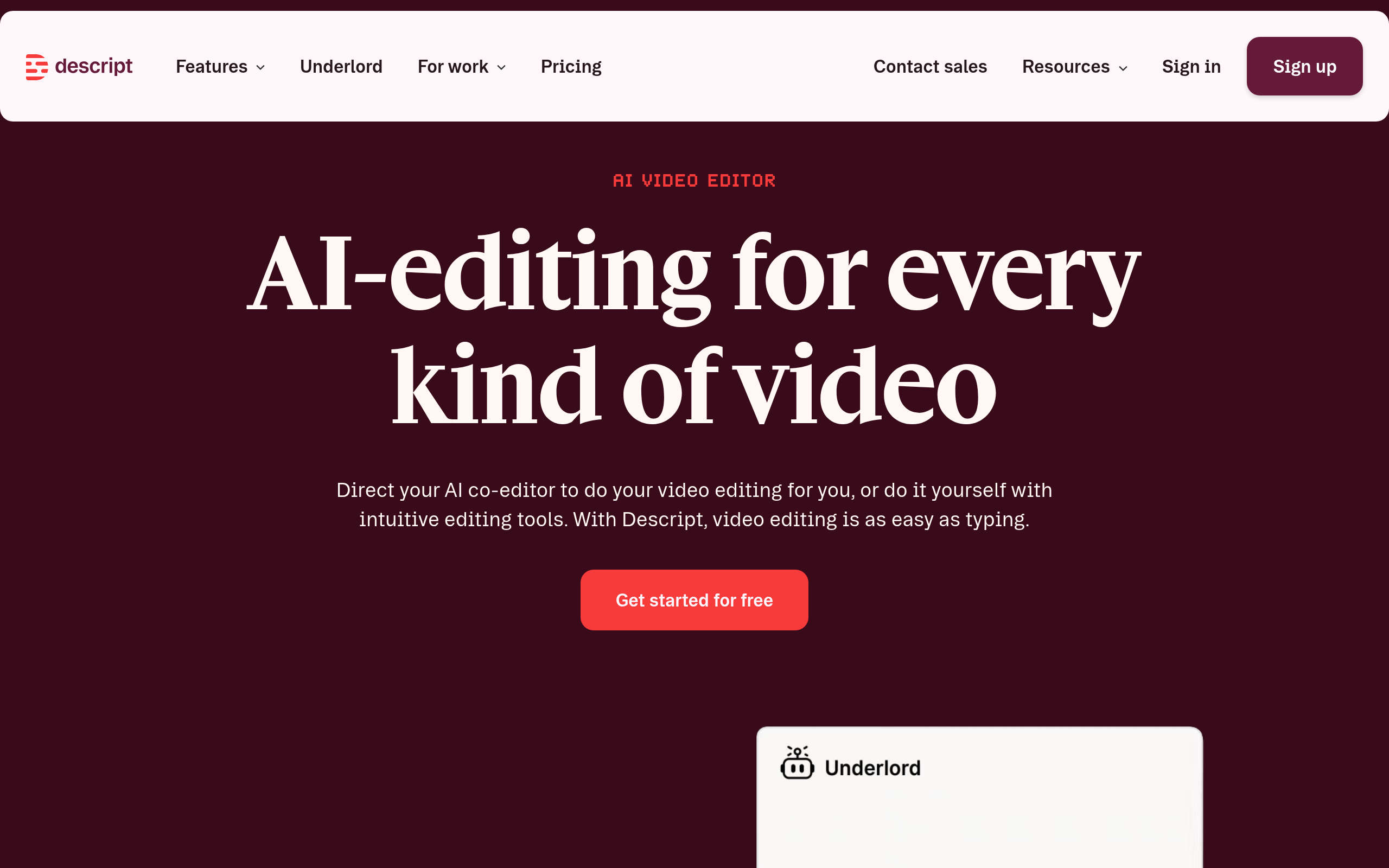
Speed is crucial, especially for podcasters who need quick turnarounds. AI transcription tools generally offer processing times significantly faster than human services, which take around 12 hours. Whisper-powered services, for example, have consistently ranked highest for podcast-specific audio quality.
Speaker labeling is another essential feature. For podcasters managing multi-speaker episodes, speaker identification transcription helps maintain clarity and accuracy. Tools that can automatically differentiate speakers, such as DeepScribe, elevate workflow efficiency.
Key Insight: "Whisper-powered services consistently rank highest for audio quality and transcription accuracy in podcast contexts."
Cost was examined in terms of per-minute pricing. Lemonfox stands out with incredibly low rates at ≈$0.0028 per minute. For podcasters who need high-quality transcription without breaking the bank, strategic use of free tiers, such as Otter.ai’s 300 free minutes per month, can provide substantial savings.
We also considered the scalability of these tools. Starting from budget-friendly options allows podcasters to validate their workflow and then transition to more robust solutions like DeepScribe as their needs grow. DeepScribe’s tiered plans offer a clear upgrade path, providing flexibility as podcasting frequency increases.
These criteria ensured our recommendations are not just budget-friendly, but perfectly tailored to the unique demands of podcasters.
1. DeepScribe — The Podcaster’s Choice
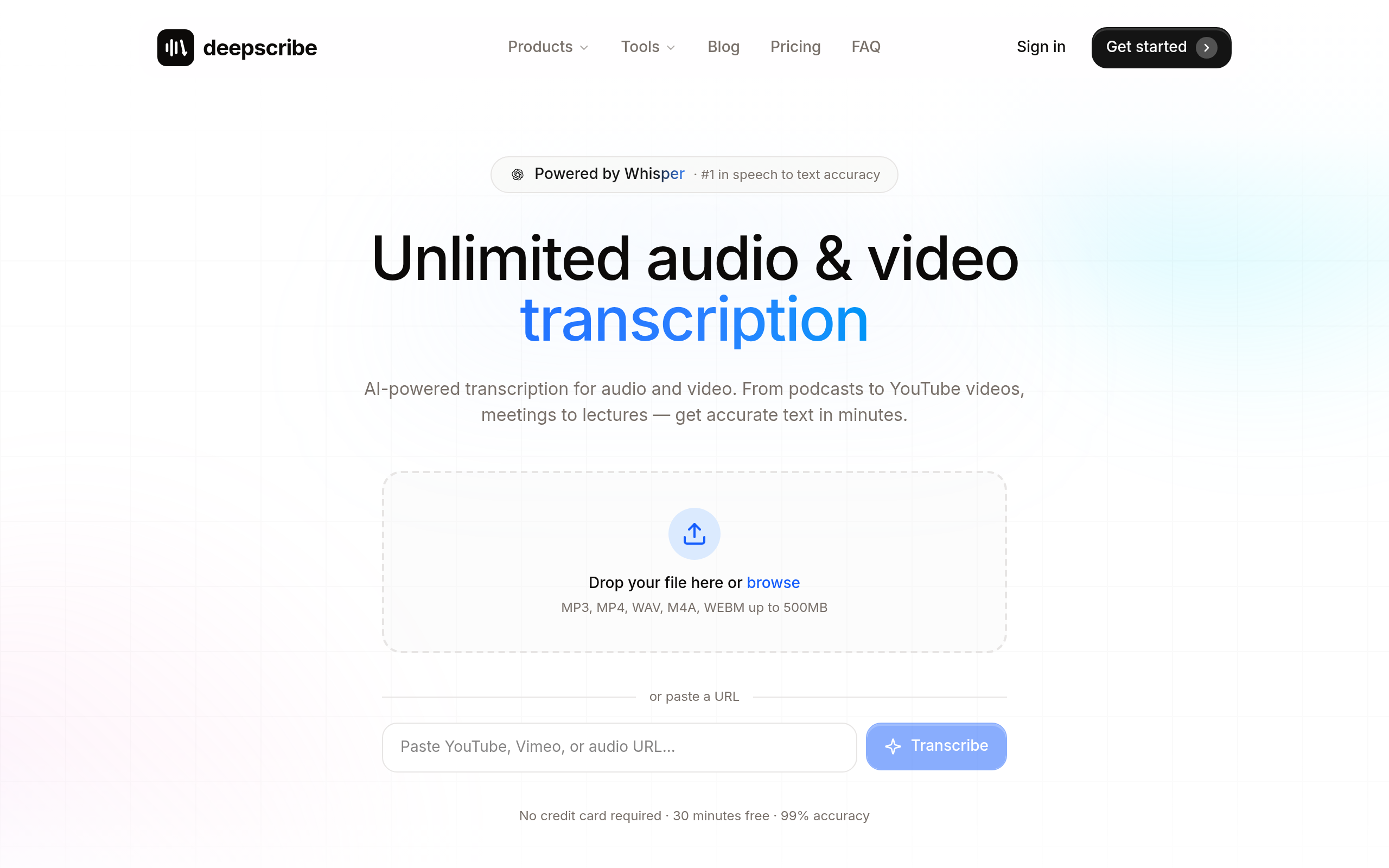
If you're a podcaster looking for a reliable, budget-friendly transcription tool, DeepScribe is a standout choice. Offering a seamless blend of affordability and functionality, DeepScribe comes packed with features tailored specifically for podcasters aiming to streamline their workflow.
Price Approach and Tiered Plans
DeepScribe presents a flexible pricing structure that grows with your needs, making it an ideal solution for podcasters at various stages. You can start with their Free plan, which offers 30 minutes per month, perfect for those testing the waters. For more involved projects, the Basic plan at $15/month provides 300 minutes, while the Pro and Business plans at $29/month and $99/month, respectively, offer significantly more minutes, larger file size support, and additional features. These scalable options ensure you’re only paying for what you need, with the ability to upgrade as your podcasting needs evolve.
Features: Speaker Labeling and Multilingual Support
DeepScribe is engineered to handle the nuances of podcast transcription with precision. Speaker labeling is a standout feature, automatically identifying and marking different voices, which is invaluable for multi-host or interview-driven podcasts. This ensures that attributions remain clear without adding manual work. Furthermore, the platform's robust multilingual support—offering automatic detection and transcription in over 100 languages with the Pro/Business plans—opens up your content to global audiences, which is increasingly important in today's interconnected world.
Workflow Integration and Scaling Plan
Integrating DeepScribe into your workflow is straightforward. Its capability to produce transcripts, show notes, and even extract key points like summaries and action items streamlines the production process significantly. This kind of workflow integration helps in repositioning content for various uses, such as creating promotional snippets or comprehensive show notes, without switching between multiple tools.
As your podcasting journey evolves, DeepScribe provides a clear scaling plan. Start with the free tier to validate your transcription workflow and gradually move through their Basic, Pro, and Business tiers as your frequency and complexity increase. This makes DeepScribe not just a transcription tool but a strategic partner in scaling your podcast production efficiently.
“AI is faster and cheaper. Human transcription is still slightly more accurate but comes at a higher cost.” — Tomedes
With its Whisper-powered accuracy and rapid turnaround, DeepScribe is designed to meet the needs of independent podcasters who want the most bang for their buck without compromising on quality.
2. Lemonfox — Most Affordable Per Hour
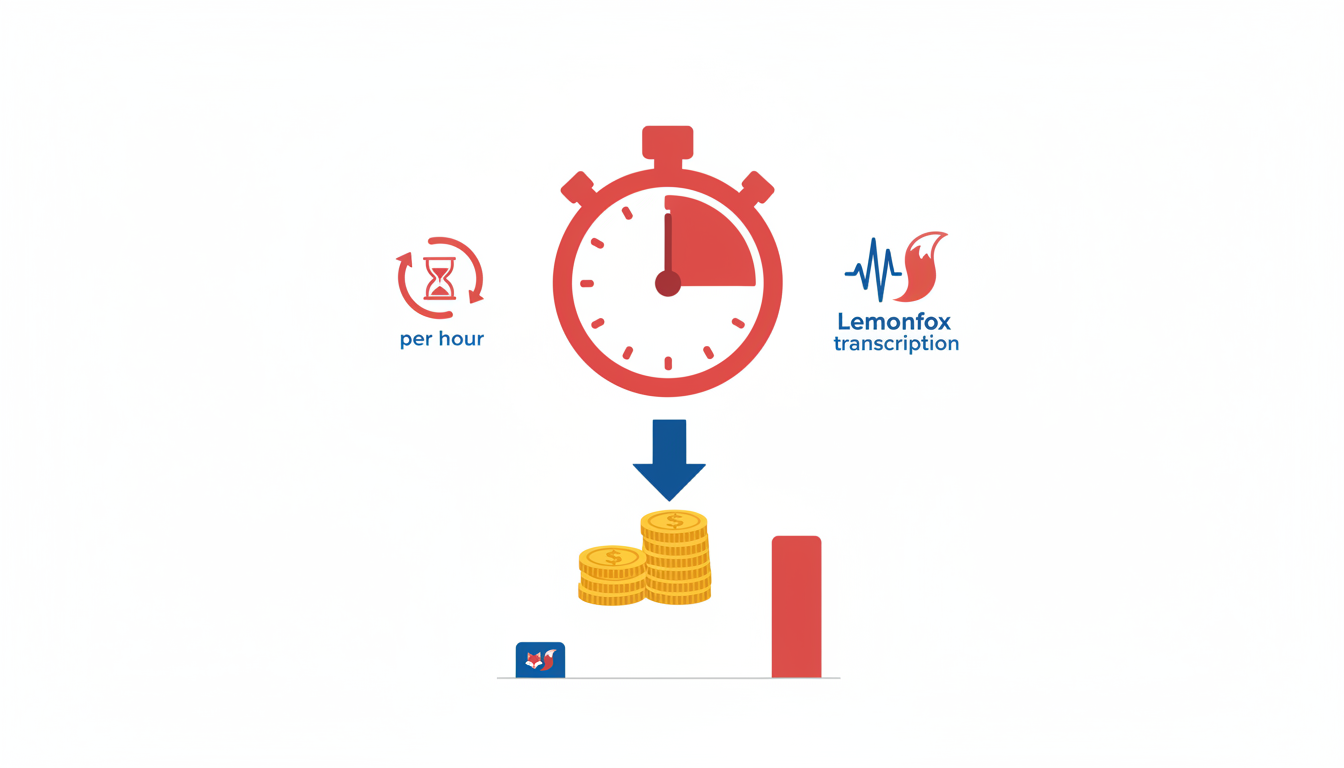
If you're a podcaster on a tight budget, Lemonfox might just be your wallet’s best friend. Known for its ultra-cheap pricing, Lemonfox charges an astonishingly low rate of $0.0028 per minute. This means you’re looking at less than $0.17 per hour for transcription services, making it one of the most cost-effective solutions available (Source: Lemonfox blog). Such competitive pricing is a game-changer for podcasters who need to keep expenses low but still require reliable transcription services.

Why It Works for Budget-Conscious Podcasters:
- Scalable Pricing: Lemonfox’s rate structure is perfect for those who are venturing into podcasting without hefty initial investments. You pay per minute, allowing you to easily predict your costs as you scale your podcasting efforts.
- Efficiency: Despite the low cost, Lemonfox offers quick turnaround times, allowing podcasters to maintain a steady workflow without waiting extensively for transcripts.
However, it’s important to consider some limitations when using Lemonfox:
- Feature Set: While it's fantastic for the price, Lemonfox might lack advanced features like AI summaries or detailed speaker labeling, which are often crucial for podcast workflows. Such features are critical if you’re managing episodes with multiple speakers or need integrated show notes.
- Export Formats: Depending on your needs, the supported export formats may not fit all possible requirements, especially if you need something beyond standard text outputs like SRT or VTT for captions.
“Lemonfox has disruptive pricing that democratises access... enterprise-grade for startups.” (Source: Lemonfox blog)
For podcasters, understanding these constraints is paramount. Lemonfox is a fantastic starting point, especially if you're validating a workflow without committing to a subscription. Once you outgrow its limitations, exploring upgrades like those with DeepScribe’s tiered plans might be a wise move to support your growing podcast empire.
Flexible and cost-effective, Lemonfox stands out as the most affordable transcription service for budget-conscious podcasters who are just getting started. Its remarkable per-minute pricing ensures that every voice in your podcast is heard, transcribed, and crafted into future episodes without breaking the bank.
3. Descript — Best Workflow Editor
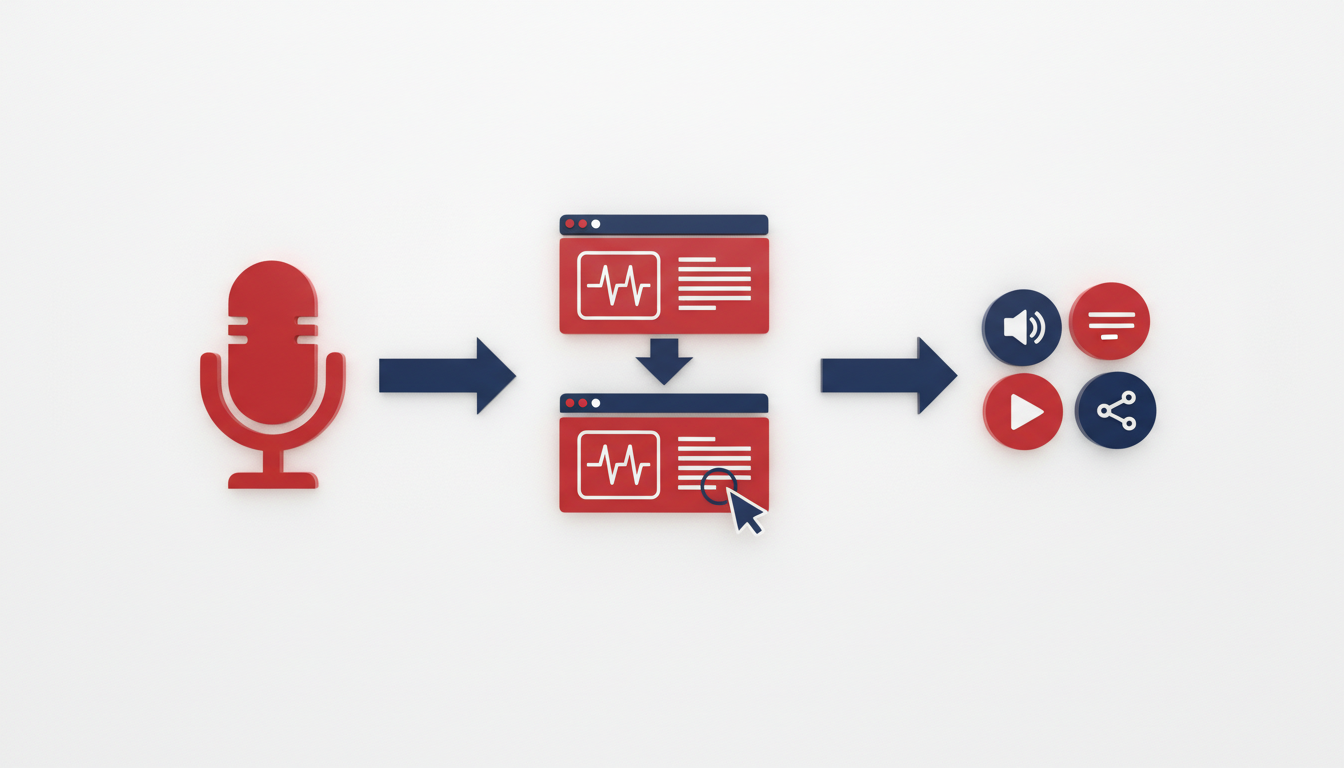
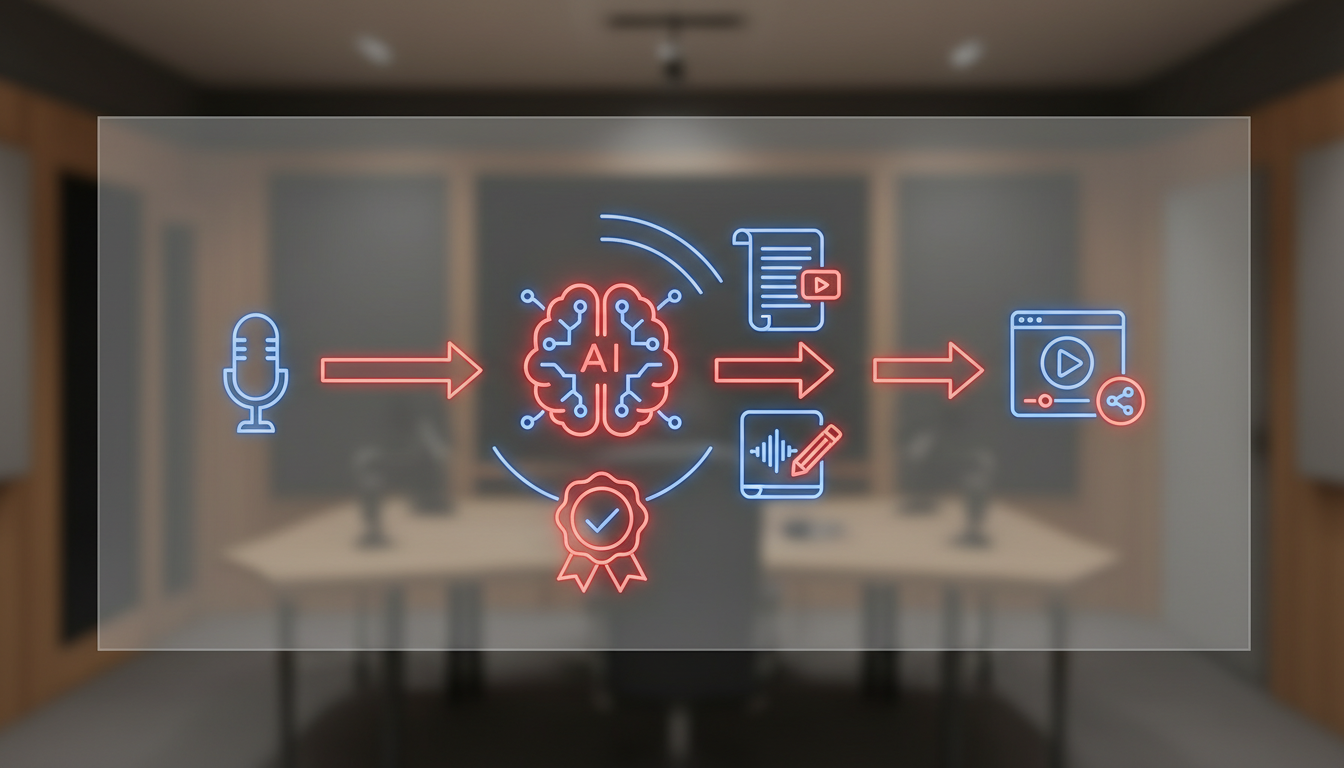
When it comes to seamless integration of editing and transcription, Descript proves to be a standout choice for podcasters, particularly those who appreciate a text-editing workflow. Priced at $15/month, Descript not only transcribes but also allows you to edit audio and video like you're working with a word processor.
One of the key reasons Descript has gained popularity among beginners is its intuitive editing interface. You can edit your podcast by simply cutting and rearranging text, and the audio changes right along with it. This feature simplifies the editing process, making it less intimidating and more accessible to newcomers in the podcasting world.
Descript doesn't just stop at transcription and editing. It also excels in providing podcast captions and supports multiple export formats such as SRT, making it easier to generate captions for accessibility. This ensures your podcast gets the engagement it deserves by reaching a broader audience, including those who rely on or prefer text over audio.
“Descript is one of the best AI podcasting tools for beginners due to its text-editing workflow”. (Hurrdat Media)
With Descript, you also get features like speaker labeling, which is crucial for multi-speaker podcasts. This capability helps in maintaining clarity and professionalism, especially during interviews or co-hosted shows.
For those interested in a complete workflow integration, Descript offers powerful tools that extend beyond transcription. Whether it’s creating show notes from transcripts or repurposing content into video clips, Descript supports podcasters in streamlining their production process and enhancing productivity.
Descript's value becomes evident particularly when compared against traditional human transcription services. With AI-powered transcription nearly matching human accuracy but at a fraction of the cost, Descript empowers podcasters to produce quality content quickly and economically. This makes it a compelling choice for those dedicated to maintaining a high-quality output without stretching their budget.
If you're starting out or seeking an easy-to-use, all-in-one transcription and editing tool, Descript's friendly interface and robust feature set provide a strong foundation for podcast production.
4. Otter.ai — Generous Free Tier
For podcasters new to AI transcription, Otter.ai emerges as a solid choice with its generous offering of 300 free minutes per month. This makes it particularly appealing for beginners testing out transcription workflows without immediate financial commitment. The free tier provides ample room to experiment with episode transcription, explore integration in show notes, or analyze quotes for SEO.
Key Insight: Otter.ai’s free tier enables budget-conscious podcasters to validate their transcription needs without financial risk. With 300 minutes up for grabs every month, it's a budget-friendly way to glean insights into what AI transcription can offer, aligning well with those who prefer trial periods before subscribing to a plan.
However, it’s crucial to note that while Otter.ai makes strides in accessibility, there are some limitations to keep in mind. Specifically, its speaker separation capabilities are limited compared to other tools, which can be a hurdle when handling multi-speaker podcasts or interviews. For podcasters focusing heavily on accurate speaker attribution, this may pose some challenges during post-production editing.
Despite these limitations, Otter.ai’s expansive free minutes offer a risk-free entry into AI transcription. This freedom allows podcasters to comprehensively test out Otter.ai’s capabilities, helping them understand their specific needs before committing to more tailored solutions. Whether you're considering it purely for transcripts or planning to explore workflows such as exporting to show notes or creating episode highlights, Otter.ai lays a foundational experience for podcasters starting their transcription journey.
Pro Tip: As you get familiar with the process, remember that moving to a tool like DeepScribe, with more robust features like precise speaker labeling and wide-ranging export options, can further streamline your production as your podcast grows.
5. Amberscript — Accurate and Reliable
For podcasters diving into the intricate world of interviews, Amberscript stands out as a reliable choice, thanks to its focus on accuracy and speaker labeling.
Precision and Speaker Labeling
First and foremost, accuracy is where Amberscript shines. Aiming to achieve high precision, it offers features specifically designed to handle the complexity of multi-speaker environments such as interview podcasts. Speaker labeling is a core strength, allowing podcasters to easily differentiate between hosts and guests. This feature is particularly beneficial when transforming conversations into polished show notes or precise quotes, ensuring that each voice is accurately represented.
Key Insight: Amberscript’s speaker labeling is a game-changer for multi-speaker podcasts, ensuring every voice is captured correctly without the hassle of manual sorting.
Pricing and Export Formats
Amberscript's pricing model is structured to accommodate various needs, from casual creators to high-frequency podcasters. It offers pay-as-you-go options and subscription models, providing flexibility according to your transcription demands. This approach allows podcasters to avoid long-term commitments and scale their usage as required.
When it comes to export formats, Amberscript supports industry-standard options like SRT (a must for creating accessible content) and VTT, making it easier to repurpose transcripts as subtitles for video content. This feature is crucial for podcasters who want to enhance accessibility and reach broader audiences through captioned episodes.
Ideal for Interview Podcasts
If your podcast heavily features interviews with diverse speakers, Amberscript might be the perfect fit. Its capabilities ensure that complex dialogues are transcribed with high accuracy, allowing for seamless integration into your workflow. This makes it an excellent choice for podcasters aiming to maintain accuracy without extensive manual cleanup.
Amberscript’s robust accuracy and comprehensive speaker labeling support make it a notable contender for those needing reliable transcription services in the dynamic realm of podcasting.
6. Rev.com — Human-Level Accuracy
When podcasters need transcription accuracy close to human levels, Rev.com is often their go-to choice. Known for its 99% accuracy, Rev.com provides a level of precision that's particularly crucial for critical episodes where clarity and detail cannot be compromised.
Rev.com’s accuracy is ideal for episodes involving complex language, multiple speakers, or specialized jargon. This service is powered by real human transcribers, ensuring that even the most nuanced conversation details are accurately captured. However, this accuracy comes at a premium cost, approximately $1.50 per minute, which can add up quickly—making it a choice reserved for episodes of paramount importance.
Key Insight: "AI is faster and cheaper. Human transcription is still slightly more accurate but comes at a higher cost." (Source: Tomedes)
For podcasters considering the balance between cost and accuracy, understanding the break-even point is essential. AI transcription, powered by services like Whisper, offers an impressive 90%+ accuracy in just about five minutes for less than $0.006 per minute. This makes AI a practical choice for most routine episodes, where speed and budget-friendliness are prioritized. Yet, for special segments—such as those featuring high-profile guests or critical interviews—the extra investment in Rev.com's human-level scrutiny can be worthwhile.
Beyond accuracy, Rev.com supports essential podcast transcription features, including speaker labeling, which ensures that dialogues are clearly attributed to the right participants. However, the consideration of cost versus demand is vital. For regular podcasters who produce numerous episodes, consistently utilizing human transcription services could strain budgets. Here, a hybrid approach might be beneficial: leveraging AI for regular content and reserving human transcription for special episodes.
In summary, Rev.com excels in delivering unmatched accuracy, perfect for episodes that demand absolute precision. For most day-to-day podcasting needs, cost-effective AI solutions like those powered by Whisper will serve well, with Rev.com as the backup for those crucial high-stakes productions.
7. Google STT — Basic Free Solution
If you’re looking for a no-cost entry into the world of transcription, Google Speech-to-Text (STT) is worth exploring. Known for its straightforward integration with the Google ecosystem, it provides basic transcription capabilities that many podcasters might find handy.
Google STT shines in its simplicity and cost-effectiveness. As a free service, it allows podcasters to transcribe audio with decent accuracy, particularly for straightforward, single-speaker recordings. This makes it a suitable option for those just starting out or operating on a minimal budget. However, it's important to understand its limitations. While Google STT is free, it lacks the advanced features that more specialized transcription tools offer.
One key drawback is the absence of speaker labeling, which can be a dealbreaker for podcasts involving multiple speakers or interviews. This feature is crucial for podcasters who need to attribute quotes accurately, and the lack of it may require additional manual editing, offsetting the initial cost savings with time. Additionally, while Google STT supports multiple languages, its performance can vary across different dialects and backgrounds, which could affect the accuracy of your transcriptions.
In terms of workflow integration, Google STT is beneficial if your podcasting routine is already intertwined with Google’s suite of tools. For instance, transcriptions can easily sync with Google Docs for editing, making it convenient for podcasters who already use this platform for scriptwriting or show notes.
In summary, Google STT is a viable option if you're prioritizing budget and primarily dealing with uncomplicated audio files. However, as your podcasting endeavors grow, you might find yourself needing more robust features like speaker labeling and enhanced accuracy, which is where more dedicated tools like DeepScribe come into play. If you’re curious about ways to transcribe audio efficiently, check out DeepScribe for more options tailored to podcasters’ needs.
AI vs Human Transcription for Podcasts: When to Pay for 99%
When you're juggling budgets and deadlines, deciding between AI and human transcription can feel like a balancing act. Let’s dive into when each option makes sense for podcasters.
Break-even Analysis: Cost vs. Speed
AI transcription is lightning-fast and budget-friendly. With rates like Lemonfox.ai’s at just $0.0028 per minute, or Whisper's $0.006 per minute, you’re paying cents per audio hour. These AI tools typically achieve 90%+ accuracy within 5 minutes. In contrast, human transcription services boast near-perfect 99% accuracy but come with a heftier price tag of $1.50 per minute and a 12-hour turnaround.
Knowing when to choose which boils down to purpose and precision. If you're focused on quick draft transcriptions for show notes or SEO, AI transcription might be the most cost-effective choice. For podcasters who prioritize time, AI is often faster and cheaper.
Tomedes Insight: "AI is faster and cheaper. Human transcription is still slightly more accurate but comes at a higher cost."
When Human Transcription is Worth It
Human transcription shines when precision is critical. Consider opting for human services if your podcast episode:
- Handles sensitive topics requiring flawless accuracy.
- Features poor audio quality with heavy background noise.
- Includes multiple speakers whose words need exact attribution.
In these cases, the peace of mind that comes with human-reviewed accuracy can justify the steeper cost, especially for pivotal episodes with legal or marketing implications.
Advantages of Whisper-Powered Tools
Whisper-powered tools like DeepScribe combine cost-effectiveness with top-tier quality, allowing podcasters to achieve high accuracy without breaking the bank. Whisper's model stands out, especially for those needing reliability and speed in a scalable solution, making it a strong contender in the AI transcription market.
Understanding your needs and budget constraints helps you decide when the higher cost of human transcription is justified—and when AI like DeepScribe can efficiently handle your podcast's transcription needs.
How to Get Better Transcripts Without Paying More
Improving the quality of your podcast transcripts doesn't have to involve any added expenses. Here's how you can enhance your transcription quality effectively:
Enhance Your Audio Quality
Start with clear audio. This is your best bet for accurate transcripts. Use a high-quality microphone and minimize background noise. Consider using pop filters and noise dampeners for a stable recording environment. Ensure all speakers are using the same mic setup when possible; mismatched audio can lead to inconsistent transcription quality.
Position your microphone correctly. Place it at an optimal distance from the speaker — usually about six inches away — to prevent distortion or low volumes.
Check your recording environment. Choose a quiet room with minimal echo. Recording in a soundproofed area can drastically improve audio clarity, which directly translates to better transcription quality.
Best Practices for Speaker Labeling Setup
Use AI solutions with speaker labeling capabilities. Tools like DeepScribe excel in this area with automatic speaker detection and labeling, ensuring attribution remains intact for interviews and co-hosted episodes.
Clearly identify speakers. Encourage each person to introduce themselves the first time they speak. This setup assists AI tools in differentiating voices and labeling them accurately.
Consistently name files. Use filenames that reflect the number of speakers and any special settings or themes of the episode. This assists in organization and allows more accurate label prediction.
Taking these steps, you can substantially improve transcript accuracy, making it easier to repurpose transcripts into show notes or signposts for editing clips and quotes. Consistent improvements in audio input and speaker identification create a streamlined workflow, enhancing your end content without additional costs.
FAQ on AI Transcription for Podcasters
Transcription is a key concern for podcasters looking to enhance their workflow. Here are some common questions to help you make informed decisions.
What is the accuracy of AI transcription tools compared to humans?
AI transcription tools typically offer around 90%+ accuracy with a rapid turnaround of about 5 minutes per clip. While not perfect, this level is usually sufficient for generating show notes, quotes, and captions. DeepScribe, powered by OpenAI’s Whisper model, provides a robust accuracy baseline at 99% in optimal conditions, handling variations in accents and background noise effectively. On the flip side, human transcribers, while more accurate at approximately 99%, come with a significant cost of around $1.50 per minute and longer turnaround times (~12 hours).
How do costs compare between AI and human transcription?
AI transcription tools offer a budget-friendly approach, with options like Lemonfox pricing at roughly $0.0028 per minute (less than $0.17/hour), making it significantly cheaper compared to human transcription. Whisper-powered services such as DeepScribe help keep quality high while still managing costs effectively, particularly for podcasters looking to scale without breaking the bank.
What features should podcasters prioritize?
Podcasters often need features like speaker labeling, multi-language support, and flexible export formats. DeepScribe supports these, offering exports in various formats (TXT, SRT, VTT) and handling multiple languages with ease. For those needing speaker identification—crucial during interviews and multi-host episodes—DeepScribe and other AI tools have you covered, making transcripts clearer and more structured.
Are there any free transcription tools available?
Yes, tools like Otter.ai provide a free tier with 300 minutes per month, which is excellent for beginners aiming to test workflows without risk. As your needs grow, consider upgrading to more comprehensive services like DeepScribe, which starts free and scales with your podcasting journey, offering advanced features on higher tiers.
By understanding these FAQs, you can choose the transcription tool that best fits your podcasting needs. For a deeper dive into AI transcription benefits, check out DeepScribe.
Conclusion: Your Transcription Strategy for Success
It's time to wrap up with a clear strategy tailored for your podcasting needs. As podcasters, understanding the balance between cost, quality, and functionality in transcription tools can transform your workflow.
Top Picks for Diverse Podcasting Needs
DeepScribe emerges as the expert's choice for those looking to scale. Its Whisper-powered accuracy ensures reliable transcripts, minimizing post-production time. With a free tier for 30 minutes per month, it's perfect for testing the waters. As your production ramps up, the Basic tier offers 300 minutes for $15/month, while the Pro tier, at $29/month, provides extensive features like speaker labeling and AI-generated action items.
Lemonfox offers an ultra-budget option at ≈$0.0028 per minute, perfect for podcasters needing sporadic transcription without frills. Its disruptive pricing democratizes access, allowing creators to allocate resources elsewhere.
Descript's $15/month plan suits podcasters who appreciate an integrated text-editing workflow. Described by Hurrdat Media as beginner-friendly, it's ideal for those who prefer a hands-on approach to post-editing.
Transitioning to DeepScribe for Scalable Solutions
If you’re starting out, exploring free tiers from tools like Otter.ai with its 300 free monthly minutes is prudent. However, as your show frequency increases, DeepScribe becomes the strategic choice, offering transcription efficiency, multilingual support, and workflow integration, covering everything from show notes to captions seamlessly.
Consider this scaling path:
- Occasional Podcaster: Try DeepScribe Free for up to 30 minutes monthly.
- Weekly Show Producing: Move to the Basic tier—ideal for consistent uploads with a need for SRT exports.
- Interview-Heavy Production: As complexity grows, the Pro tier provides advanced features like custom AI prompts and extensive export formats.
"AI is faster and cheaper. Human transcription is still slightly more accurate but comes at a higher cost," notes Tomedes. As AI options continue to improve, DeepScribe offers an enticing balance of quality and cost-effective scalability.
For deeper insights, explore DeepScribe's blog for updates and tips on maximizing your transcription strategy. With its capacity to elegantly manage everything from single shows to a multi-podcast network, DeepScribe positions itself as the go-to choice for podcasters ready to elevate their process.
Frequently Asked Questions
What are the best free AI transcription tools?
Otter.ai offers 300 free minutes per month, suitable for beginner podcasters testing workflows.
How do AI transcription tools handle multiple speakers?
Tools like DeepScribe offer speaker labeling to help separate and identify different speakers in a podcast.
Is human transcription more accurate than AI?
Human transcription achieves about 99% accuracy, but at a higher cost and longer turnaround than AI options.
What formats can transcription tools export to?
Most tools support TXT, SRT, and more advanced formats like VTT and DOCX depending on the plan.
Can you get accurate transcripts from Whisper-powered tools?
Yes, Whisper-powered tools like DeepScribe provide high accuracy and support for multiple languages.
Final Thoughts
Choosing the right AI transcription tool depends on your podcasting frequency and specific needs. Here are the top picks based on different scenarios:
- Occasional users: Start with DeepScribe's Free plan for up to 30 minutes of transcription per month.
- Weekly podcasters: The Basic plan is perfect, offering 300 minutes monthly for just $15.
- Interview-heavy shows: Consider the Pro plan for 900 minutes at $29/month, which includes enhanced features and priority processing.
To scale seamlessly as your podcast grows, DeepScribe offers a clear upgrade path. Begin with the Free tier to explore its capabilities without a credit card, advance to Basic as your schedule demands more, and consider Pro for high-volume needs. Businesses with larger demands can benefit from unlimited transcription with the $99 Business plan.
Ready to give DeepScribe a try? No credit card is required on the Free plan. Check out our guide to free transcription tools for more tips to get started.
Written by

DeepScribe Team
Content Team
The DeepScribe content team shares insights on audio transcription and AI technology.
Related Articles
Continue reading about this topic
7 Best Budget AI Transcription Tools for Podcasters
Explore the top budget AI transcription tools for podcasters. Learn how to select the right tool based on cost-saving metrics and podcast volume.

DeepScribe Team
March 5, 2026 · 22 min read · 4,226 words